Take a mouse near the end of its life. At twenty months, it is roughly the equivalent of a person in their seventies. Deliver a single gene into a small region at the base of its brain, and thirty days later the animal has thicker skin, denser bones, better balance, and a sharper memory. Its body has moved, in some measurable respects, backward.
That experiment is real. It was published in the journal PLOS Biology in 2023 by a team led by Lige Leng at Xiamen University, and the gene in question codes for a protein called Menin, which acts as a brake on inflammation in the hypothalamus. As Menin levels fall with age, that brake fails, and the researchers traced a chain of consequences reaching from the brain out to skin and bone. Restoring Menin, or supplementing a related molecule called D-serine, undid part of the damage.
Results like this one arrive regularly now, usually wrapped in the phrase "scientists reverse aging." The phrase is doing a lot of concealing. What the Menin study actually shows is narrower and, oddly, more interesting: that aging is not a sealed process running on its own schedule, but something with levers, at least in a mouse. The harder questions begin exactly where the headline stops. Why do we age in the first place? How much of it can be moved? And is any of what works in a mouse going to work in you?
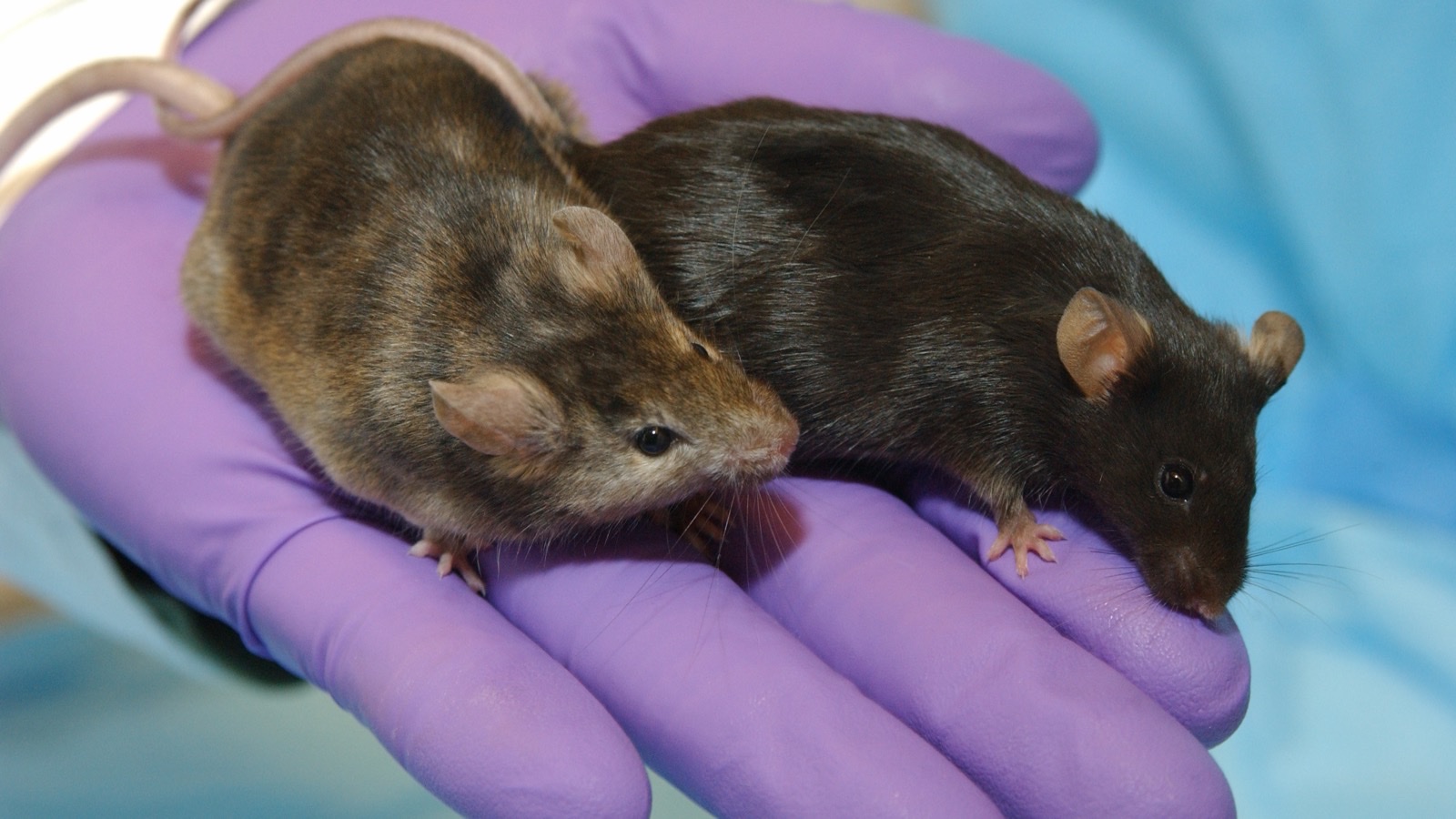 Laboratory mice are the model organism behind almost everything we know about slowing aging. Turning what works in them into more healthy human years is the task that remains unfinished. Photograph: National Institutes of Health / NHGRI (Maggie Bartlett); public domain.
The reason evolution never bothered to keep us young
Start with a puzzle that bothered biologists for a century. If aging is so obviously bad for an organism, why didn't natural selection eliminate it? A body that stayed young and fertile would out-reproduce a body that decayed. Aging looks like a design failure that evolution had every incentive to fix and never did.
The resolution, worked out across the mid-twentieth century, is that selection simply stops paying attention to you once you have reproduced. Peter Medawar pointed out in the 1950s that harmful genes which act only late in life escape natural selection almost entirely, because most animals in the wild are already dead from predators, cold, or hunger before those genes matter. Such mutations accumulate, unopposed, in the genome. George Williams added a sharper twist in 1957: a gene that helps you early and harms you late will be actively favored, because the early benefit is what gets passed on. Strong bones and fertility now are worth more to evolution than a working body at eighty. Thomas Kirkwood later framed the trade-off in terms of energy. A body has a finite budget, and one spent on reproduction is not spent on repair. He called it the disposable soma: the body is the packaging, and packaging is not built to last.
This is the first thing to understand about aging, and it reframes everything that follows. Aging is not a purpose-built clock counting down to a scheduled end. It is deferred maintenance, the slow result of repair systems that evolution had no reason to make perfect. That is bleak news for anyone hoping aging has a single off-switch. It is good news for anyone hoping it can be slowed, because neglected maintenance is, in principle, something you can fund.
Aging has parts you can name
For most of history, aging was a single word for a single fog. The most important shift in the modern science is that the fog has been resolved into components.
In 2013, a group of biologists led by Carlos López-Otín proposed a common vocabulary: the hallmarks of aging, a list of distinct processes that each drive the decline and each meet a strict test. A hallmark appears with age; accentuating it speeds aging; easing it slows aging. The original list had nine entries. A 2023 update in Cell expanded it to twelve, including genomic instability, the erosion of the telomere caps on our chromosomes, epigenetic drift, the failure of the cell's protein-quality controls, mitochondria that leak and sputter, the exhaustion of stem cells, and a low, chronic inflammation that researchers have nicknamed "inflammaging."
Two hallmarks are worth pausing on, because they turn up repeatedly in attempts to intervene. One is cellular senescence: cells that have stopped dividing but refuse to die, lingering in tissues and secreting a toxic cocktail that inflames everything around them. They are sometimes called zombie cells, and they accumulate as we age. The other is deregulated nutrient sensing, the network of molecular switches, chiefly insulin signaling and the growth pathway called mTOR, that tells a cell whether to grow or to conserve and repair. Push those switches toward repair, and animals tend to live longer.
The value of the hallmarks framework is not that it is complete. It is that it turns aging from a mystery into a list of targets. You cannot intervene on "getting old." You can intervene on senescent cells, or on mTOR, or on inflammation. Every serious longevity therapy is an attack on one or more items on that list.
What actually works, in the laboratory
Here the evidence is genuinely encouraging, and it is important to say so plainly before the qualifications arrive. Several interventions slow aging in animals, and a few of them reach into humans.
The oldest and most reliable is eating less. In 1935, the nutritionist Clive McCay found that rats fed a restricted diet lived substantially longer than rats allowed to eat freely. The finding has since held up across yeast, worms, flies, and mice with remarkable consistency. When researchers finally ran a careful version in people, in the CALERIE trial whose results appeared in Nature Aging in 2023, 220 healthy adults cut calories for two years. They managed roughly a 12 percent reduction, not the 25 percent intended, and the effect was correspondingly modest: one measure of the pace of biological aging slowed by about two to three percent, while two other clocks showed no significant change. Real, measurable, and small.
The drug rapamycin tells a similar story with a sharper edge. It suppresses mTOR, and in mice it extends lifespan more dependably than almost anything else known, even when started late in life. In humans the evidence is thinner and more specific: a 2014 trial led by Joan Mannick showed that a low dose of an mTOR inhibitor improved older adults' immune response to a flu vaccine by around twenty percent, and a more recent year-long trial found low-dose rapamycin was tolerated and nudged some aging biomarkers. No human trial has shown that it adds years of life, because none has run long enough to find out.
Then there are the newer approaches. Senolytics, drugs that selectively kill senescent zombie cells, rejuvenate aging mice impressively. The first human evidence, published in eBioMedicine in 2019, showed that a combination of dasatinib and quercetin reduced senescent-cell markers in patients. But when the National Institute on Aging funded a trial to see whether the same drugs improved bone health in older women, the benefit turned out to be slight. Cellular reprogramming is more dramatic still: by partially resetting a cell's epigenetic state with the same factors used to make stem cells, researchers have restored youthful function to tissues in mice, including regrowing damaged optic nerves. That work is a frontier, and it is entirely in animals.
The metformin story is the most instructive of all, because it is mostly a story about what we do not yet know. Metformin is a cheap, common diabetes drug, and observational data hinted for years that people taking it aged more slowly. That hint launched TAME, Targeting Aging with Metformin, designed as the first clinical trial built explicitly to test whether a drug can slow human aging itself, measured not by a lab clock but by the actual onset of cancer, heart disease, dementia, and death. It is a landmark in intent. It has also struggled for years to raise the money, and as of 2026 it has not enrolled a single participant, let alone produced a result. The honest status is that metformin as an anti-aging drug remains a well-motivated hypothesis, not an established fact.
Step back and a pattern emerges. In short-lived, genetically uniform laboratory animals, we can slow aging repeatedly and sometimes reverse its signs. In humans, the same interventions so far move biomarkers by a few percent. The distance between those two sentences is the whole problem.
Two walls between the mouse and you
Why is the gap so stubborn? Two obstacles stand in the way, and neither is close to falling.
The first is that a mouse is not a small human. Laboratory mice are short-lived, inbred, and raised in clean cages with unlimited food, which makes them exquisitely sensitive to interventions that a messy human life may shrug off. The history of medicine is littered with therapies that cured mice and did nothing for people. An intervention that adds months to a two-year-old animal has, at best, given us a lead to investigate, not a treatment.
The second wall is the possibility that we are already near a limit. In 2024, a team led by the epidemiologist S. Jay Olshansky published an analysis in Nature Aging showing that the once-rapid gains in human life expectancy have been slowing since 1990, even in the longest-lived countries. The great twentieth-century leaps came from defeating the things that killed people young: infection, childhood mortality, some cancers and heart disease. Those victories are largely won, which leaves aging itself as the remaining barrier, and aging has proven far harder to move. The maximum verified human lifespan still belongs to Jeanne Calment, who died in 1997 at 122; no one has come close since, and the maximum reported age at death plateaued in the mid-1990s. Olshansky's conclusion is deliberately deflating: without a genuine breakthrough that slows the underlying biology, radical life extension is implausible in this century.
Not everyone in the field agrees, and the disagreement is real rather than manufactured. Researchers who study the hallmarks directly argue that we have never before been able to target aging at its roots, so the past is a poor guide. Both camps, notably, are arguing about the same missing thing: proof that we can slow aging in a human being, not just in a mouse or a methylation clock.
The prize worth wanting
The framing of "curing death" obscures a goal that is both more achievable and more valuable. Most of the suffering of old age is not the fact of dying. It is the years of decline that precede it: the decade of frailty, dementia, and disease that many people now endure at the end of long lives.
In 1980 the physician James Fries proposed a different target, which he called the compression of morbidity: not necessarily more years, but fewer sick ones, with illness squeezed into a short interval near the end. This is the quiet ambition behind serious geroscience. If aging is the shared root of heart disease, cancer, and dementia, then slowing aging even slightly might delay all of them at once, a far greater prize than curing any single disease, and one that would show up as healthspan rather than a new entry in the record books. A drug that gave the average person five extra healthy years would be one of the most consequential medical advances in history, and it would not extend the maximum human lifespan by a day.
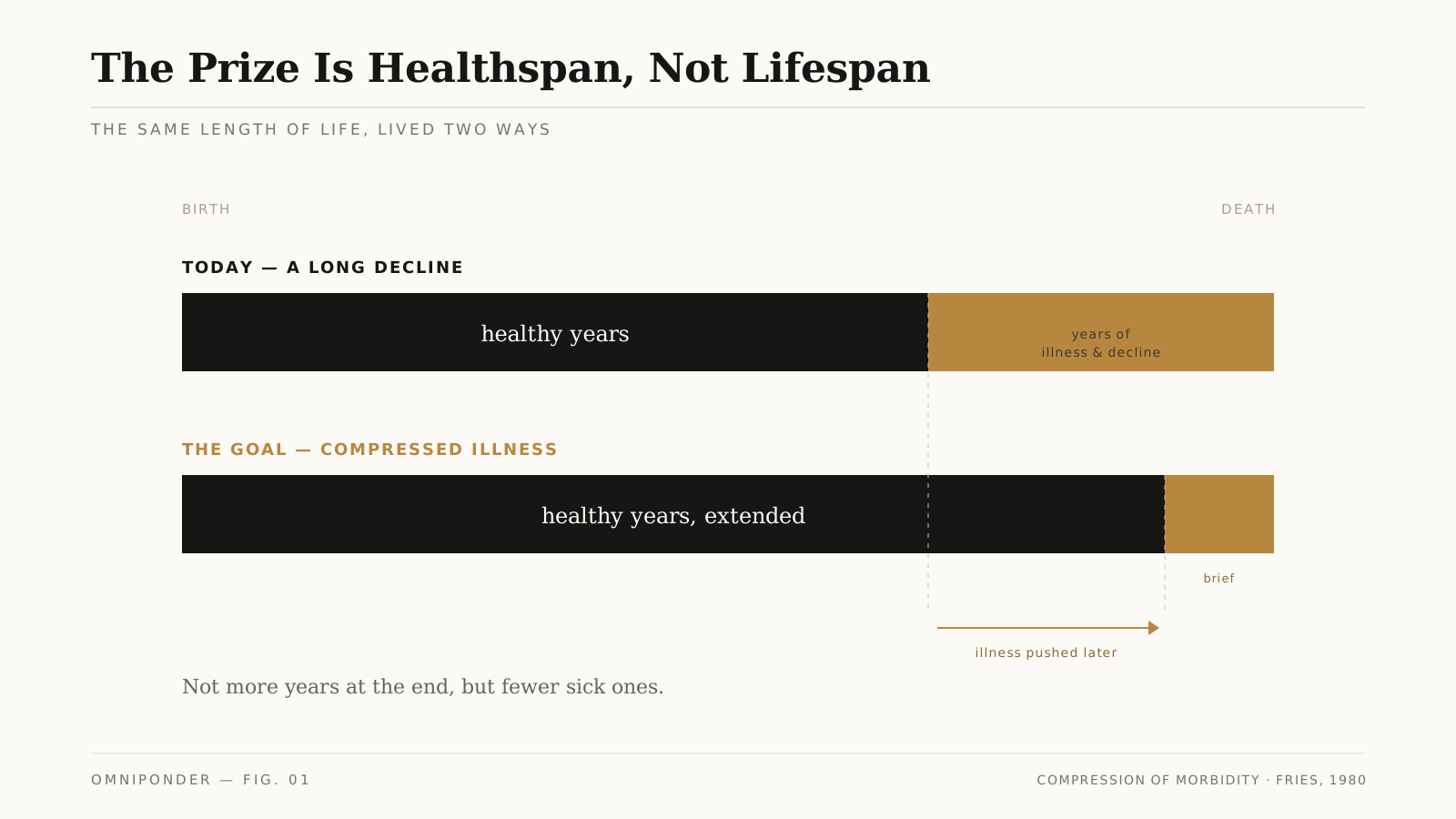 Caption: The compression of morbidity, the same length of life with illness squeezed into a shorter final stretch. Extending healthy years, not the maximum lifespan, is the realistic goal.
This is the distinction the headlines flatten. Lifespan is how long you live. Healthspan is how long you live well. Biological-age clocks are laboratory proxies for both, and moving a clock is not the same as living longer. The Menin mouse is a real and hopeful result precisely when you read it for what it is: evidence that aging is malleable in principle, that its levers exist and can be pulled, at least in an animal whose whole life is shorter than the wait for a human trial.
We finally understand aging well enough to describe it, measure it, and move it in the lab. What we have not done is prove we can give a person more good years by targeting aging itself. That, and not immortality, is the experiment that matters. Until it succeeds, the honest word for everything else is promising, which is a different word from proven.