Sixty-three years ago today, on the steps of the Lincoln Memorial, Martin Luther King Jr. was about five minutes into a speech he had been given roughly five minutes to deliver. He was reading from a prepared text. It was a good text — sober, lawyerly, built around a single controlling metaphor about a debt America owed and had failed to pay. Then, a few sentences from the end, he stopped reading.
What came next was not on the page. The passage that gave the speech its name, that schoolchildren now memorise, that is routinely called the greatest piece of American oratory of the twentieth century — "I have a dream" — appears nowhere in the manuscript King brought to Washington. He improvised it, in front of a quarter of a million people and a live television audience, in the final third of an address that was already running long.
The story of how that happened is better known than it used to be. What it means is worth sitting with, because it complicates almost everything we assume about preparation, spontaneity, and how the words that outlast us actually get made.
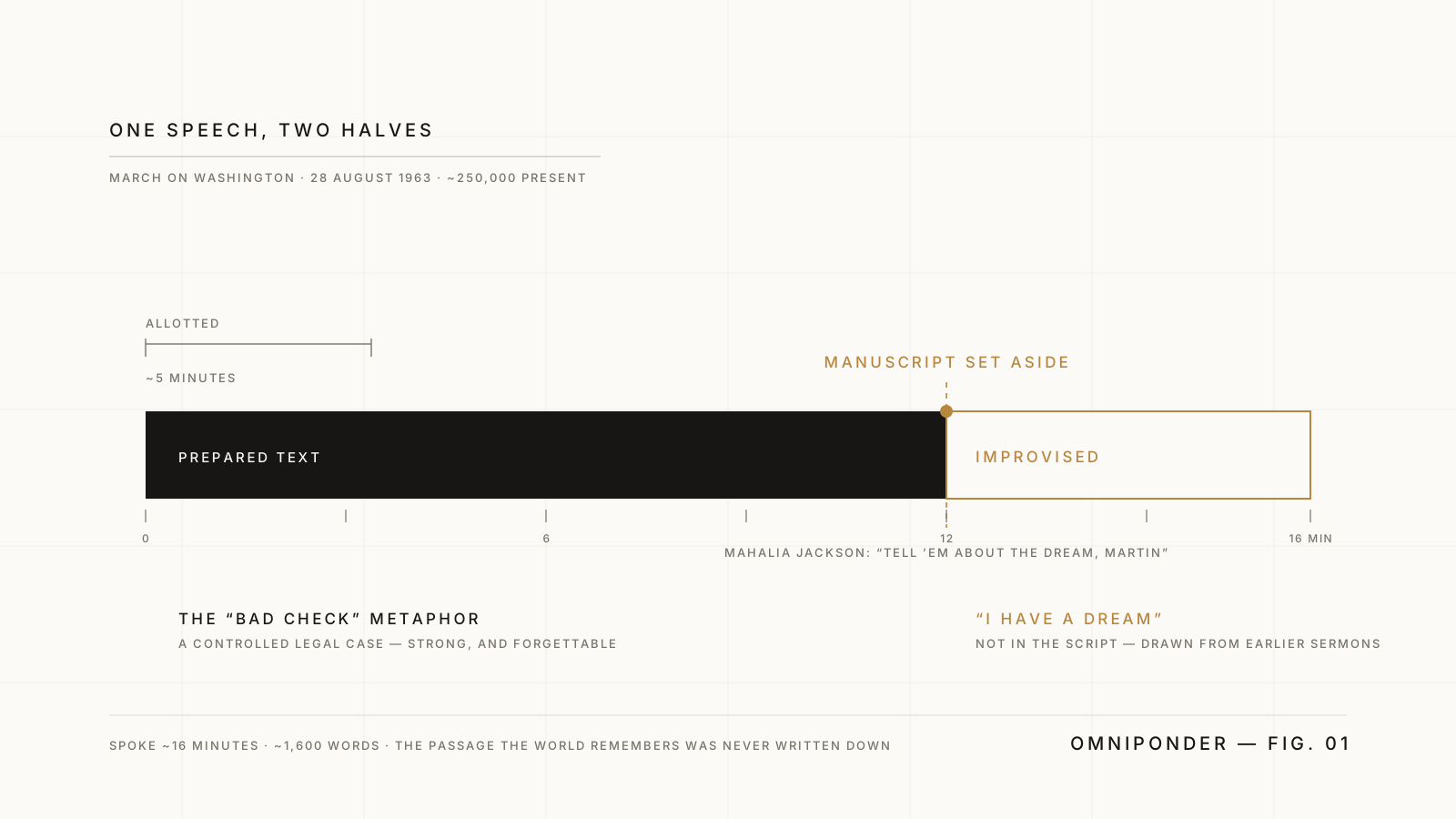 Caption: The prepared address ran to a lawyerly close on the "bad check" metaphor. The passage the world remembers began where the script ended.
What Was Actually on the Page
The speech King carried to the March on Washington for Jobs and Freedom had a working title — "Normalcy, Never Again" — and a small team behind it. His advisers Clarence Jones and Stanley Levison had worked on a draft in the days before, and by the evening of 27 August, roughly twelve hours before he spoke, King still had not settled what he would say. This is the first thing the myth obscures: there was no single, polished manuscript descending from on high. There was a contested, last-minute assembly of borrowed passages and hard arguments.
The prepared text was built on a metaphor drawn from finance, not from the pulpit. America, King argued, had written its Black citizens a promissory note — the guarantees of the Declaration and the Constitution — and had returned it marked insufficient funds.
"America has given the Negro people a bad check, a check which has come back marked 'insufficient funds.'"
It is a precise, controlled image. The marchers, King said, had come to Washington to cash that check. The prepared section repeats "now is the time" three times, hammering urgency. It is the speech of a man making a legal and moral case, and had he stopped there, at the written ending, he would have delivered a strong, forgettable address — the kind of thing that draws applause and disappears.
That is the version of history that did not happen.
The Interruption
Behind King on the platform sat the gospel singer Mahalia Jackson, who had performed earlier and who knew his repertoire from the road. As King reached the end of his prepared remarks, she called out to him — loudly enough that people nearby heard it.
"Tell 'em about the dream, Martin!"
King later said he was not certain her words reached him. What is documented is what his body did. Clarence Jones, standing a few yards away, watched King push the text to one side and shift his stance. "His whole body language changed," Jones recalled, "to that of a Baptist preacher." Jones turned to the person beside him and said: these people don't know it, but they're about ready to go to church.
Then King began the passage that everyone now knows — the dream that his four children would one day be judged not by the colour of their skin but by the content of their character; the dream of Georgia, of Mississippi, of a nation risen up to live out the true meaning of its creed. None of it was written down in front of him. He was, in the most literal sense, making it up as he went.
Why "Improvised" Is the Wrong Word, and the Right One
Here is where the story is usually flattened into a fable about spontaneity — a man opening his mouth and greatness pouring out. That is not what occurred, and the truth is more useful.
King had delivered the "I have a dream" material before. He had used a version of it that June in Detroit, before a crowd of some twenty-five thousand, and a longer version the previous November in Rocky Mount, North Carolina. The imagery was not invented on the Mall. It was retrieved — pulled, under pressure, from a deep store of sermons King had preached and refined for years.
So the moment was improvised in the way a jazz musician improvises: not from nothing, but from total fluency. The spontaneity was real, and it rested entirely on preparation that had happened somewhere other than the page in his hands.
Improvisation is not the opposite of preparation. It is what preparation makes possible when the plan runs out.
This distinction matters far beyond one speech. We tend to file human excellence into two bins — the meticulously planned and the naturally gifted — and to treat the second as a kind of magic that some people have and others do not. King's dream belongs to neither bin. It was the product of years of rehearsal deployed in a single unrehearsed instant. The reason he could abandon his script was that he had somewhere to go without it.
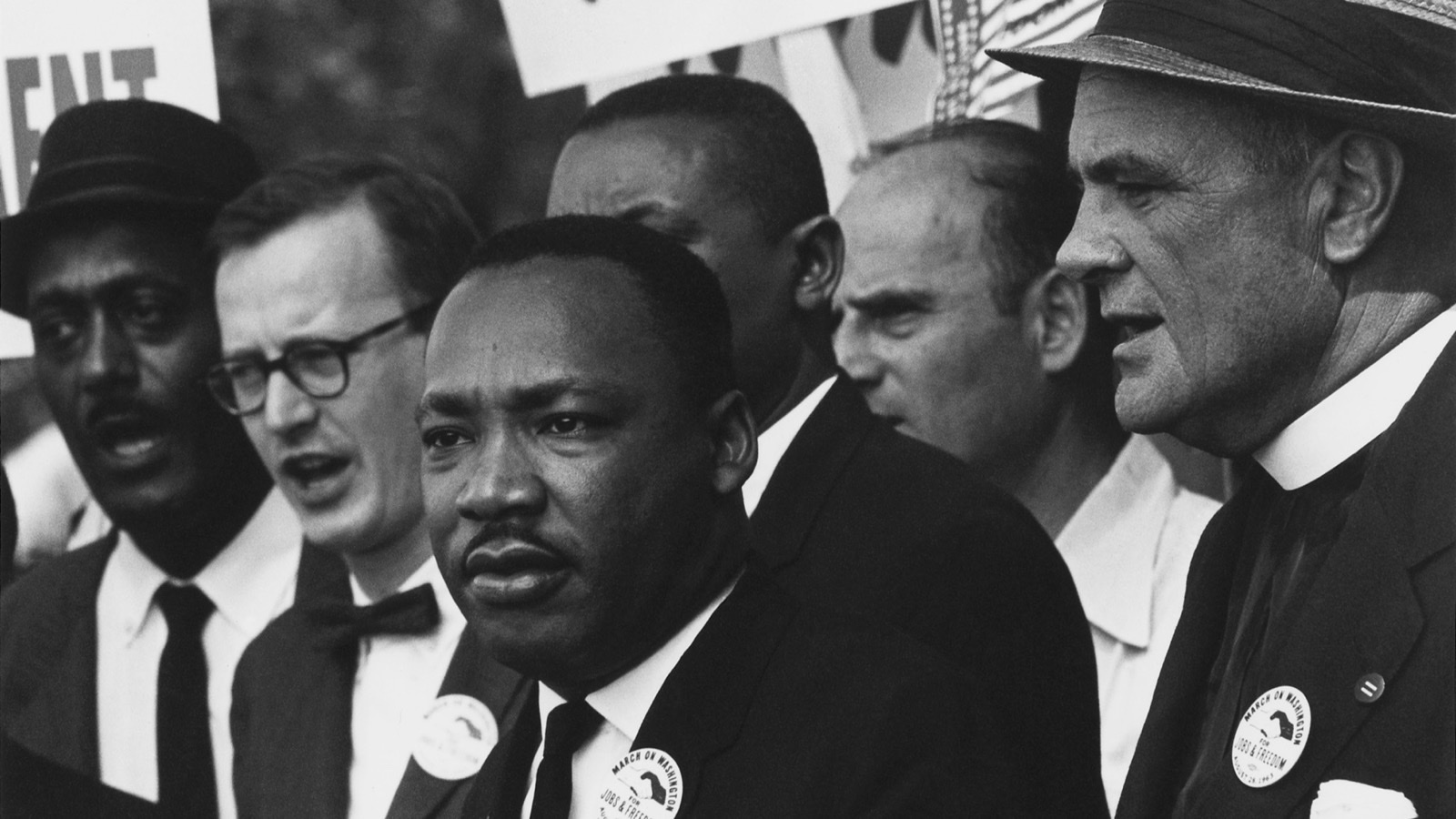 Caption: King among the marchers before the speech, 28 August 1963. Photograph by Rowland Scherman for the U.S. Information Agency, via the U.S. National Archives (NARA 542015); public domain.
The Courage of the Departure
Strip away the reverence and consider the decision as a decision. A man is at the podium, on the largest stage of his life, with the eyes of the federal government and the television networks on him. He has a finished, approved, safe text in front of him. And with a few sentences left, he abandons it to attempt something he has not planned, cannot fully control, and might not land.
This was not a small risk. Improvised oratory fails far more often than it soars; for every passage that becomes immortal there are a thousand that ramble, lose the thread, and deflate. King had no way of knowing, as he set the manuscript down, which of those outcomes he was walking into.
What the moment required was not only fluency but nerve — the willingness to trade a guaranteed good outcome for a shot at a great one. That trade is available to almost no one in almost no circumstance, because the downside is public and immediate and the upside is uncertain. The people who change what a moment means are usually the ones prepared to risk the safe version of it.
Why We Remember the Part He Didn't Write
There is a final puzzle here, and it points at something about how attention and memory work.
The prepared text was, by the ordinary standards of speechwriting, the stronger document. Tighter, more argued, structurally sound. Yet it is the improvised passage — looser, more repetitive, built on a single escalating image — that lodged in the national memory and never left. Why should the unwritten half be the half that endured?
Part of the answer is that improvisation, done by someone in full command, carries a charge that polished delivery cannot fake. An audience can feel the difference between a person reading and a person reaching. When King left the text, the crowd sensed it — Jones felt the room turn — and that shift from performance to presence is itself unforgettable, independent of the words.
The other part is that the prepared metaphor asked the audience to understand something, while the improvised passage asked them to see something. A bad check is an argument. A dream is a picture, repeated until it becomes almost visible. Understanding is quickly filed away. A picture, hung in the mind and returned to, stays.
Sixty-three years on, the lesson sits slightly askew to the way we usually tell it. The point is not that King threw away his notes and trusted the moment — a story that flatters improvisation and insults preparation. The point is that a lifetime of preparation gave him something worth trusting when the moment came, and the judgment to know the moment had come. The words were never in the script. They could only have been said by someone who had spent years writing them everywhere else.
That is the harder, better version of what happened on the Mall — and the one actually worth remembering.